Empty Coffins with Substitute Fillings
Ofrenda a la tormentaEmpty Coffins with Substitute Fillings are coffins in which other materials are arranged to imitate the appearance or weight of a body. In the investigation involving Valentín Esparza, the device becomes more than a deception at a funeral: its resemblance to an earlier coffin, opened by Amaia Salazar in San Sebastián, gives her a disturbing but still unconfirmed sense that separate cases may share a method.
The coffin associated with Esparza
The discrepancy came to light after the initial commotion, when the funeral director alerted the investigators that something had been placed inside the coffin. Three packets of sugar lay at the bottom, covered with a white towel. From above, the arrangement looked like the coffin’s padded lining; the packets also supplied weight, so the box would not feel unexpectedly light when lifted.
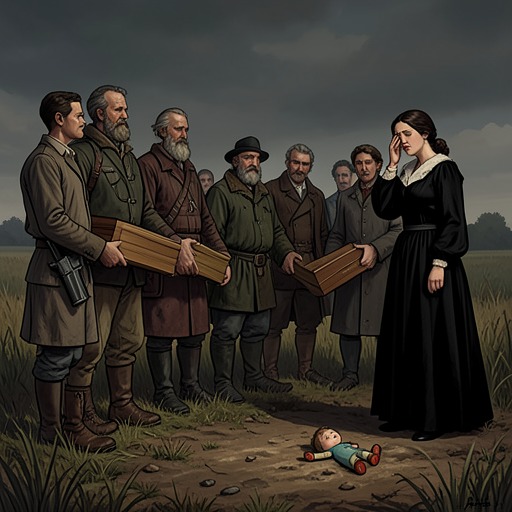
The concealment formed part of a larger set of unresolved details surrounding Esparza’s actions. His young daughter had been suffocated, and he had tried to take her body, saying he wanted to keep it a little longer. Amaia was also troubled by his insistence that the body not be cremated and by his claim that he had given it to Inguma, the demon said to take children’s breath, as one sacrifice among many. The sugar-filled coffin did not resolve those questions, but it made the handling and apparent absence of the body harder to dismiss as incidental.
The earlier coffin in San Sebastián
While traveling with Jonan, Amaia recalled a white coffin in a family mausoleum in a cemetery in San Sebastián. She had opened it herself about a month earlier and found no body: bags of gravel had been placed inside to serve the same practical purpose as Esparza’s sugar packets, making the coffin seem to contain a body when lifted.
The two substitutions were materially different, but their shared design was precise: each made an empty coffin pass, at least at a glance and by weight, for one that held a corpse. For Amaia, the repeated arrangement brought the earlier discovery sharply back into view. The resemblance suggested a possible modus operandi, not proof that the coffins or the people connected to them were linked.
Investigative significance
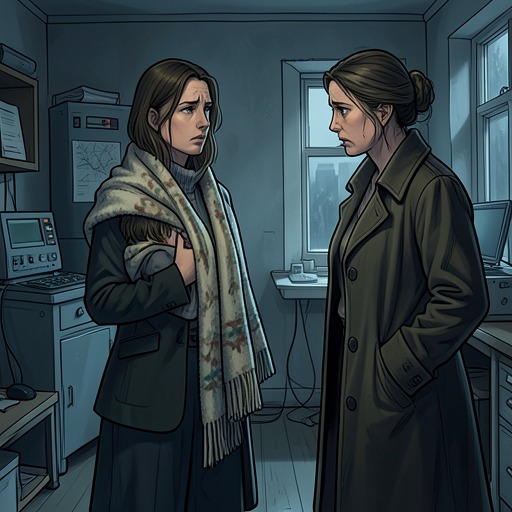
At a meeting, Amaia identified the coffin’s contents as one of three unresolved features of the Esparza case, alongside the foul-smelling trace on the polar bear toy and Esparza’s fixation on preventing cremation. The discovery prompted the team to remain alert for further leads, including the possibility that he had picked someone up along the way, while awaiting analysis of the third trace.
Amaia kept her comparison with the San Sebastián coffin at the level of intuition. She told Jonan that seeing the photograph had given her a sense of déjà vu and a conviction that the method was the same, but she explicitly cautioned that it was not yet a lead and might lead nowhere. She asked for information on sudden infant death syndrome and comparisons of mortality across other regions and countries, intending to assess whether local figures were normal before raising a broader theory. The false fillings thus function as both physical evidence and a limit on certainty: they make absence visible, but do not by themselves explain who arranged it or why.